The Best and Worst Snacks for Your Child’s Teeth: A Moorpark Parent’s Guide
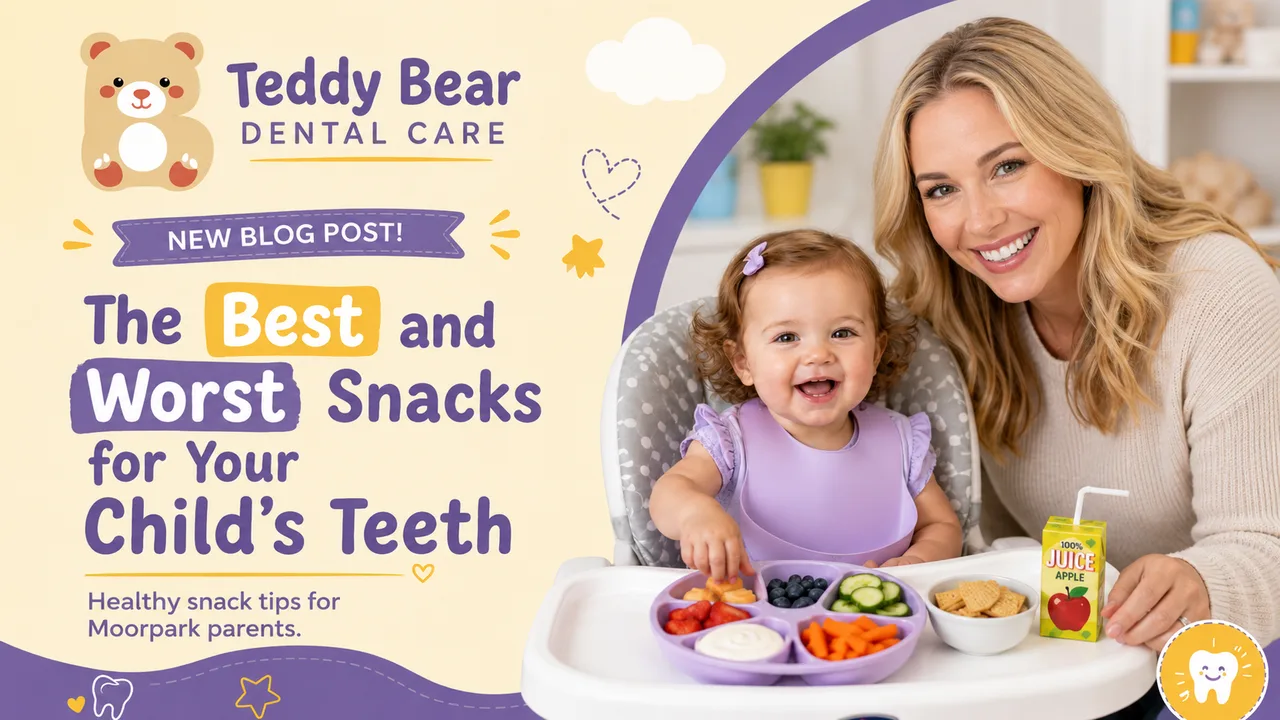
Learn about best and Worst Snacks for Children’s Teeth with practical guidance from Teddy Bear Dental Care.
Snack time seems harmless. A pouch of fruit snacks here, a few crackers there, maybe a juice box after school. But when it comes to your child’s teeth, what they snack on — and how often they snack — can make a surprisingly big difference.
At Teddy Bear Dental Care in Moorpark, we often remind parents that sugar isn't the only cause of cavities. The bigger picture includes how sticky a food is, how long it stays on the teeth, how often a child eats throughout the day, and what they drink between meals.
The good news? Tooth-friendly snacks don’t have to be boring.
Here’s a practical guide to some of the best and worst snacks for children’s teeth, plus easy ideas for families looking for healthier snacks for kids in Moorpark.
Why Snacking Matters for Teeth
Every time your child eats carbohydrates or sugar, mouth bacteria use those foods and produce acids.
Those acids temporarily lower the mouth's pH and can begin weakening tooth enamel.
Saliva helps neutralize those acids and gives the teeth time to recover.
But if a child is constantly grazing — a few crackers now, a fruit snack 20 minutes later, a sip of juice after that — the mouth may not get enough of a break.
That means when it comes to cavities, frequency can matter almost as much as quantity.
A child who eats one dessert with dinner may actually expose their teeth to less acid than a child who slowly snacks on crackers or fruit snacks throughout the afternoon.
Worst: Sticky Fruit Snacks
Fruit snacks have one of the best marketing departments in the snack aisle.
They may say “made with real fruit,” contain added vitamins, or come shaped like your child’s favorite characters.
But from a dental standpoint, many fruit snacks behave much more like candy than fresh fruit.
They are often:
- High in sugar
- Sticky
- Easy to pack into the grooves of molars
- Difficult for saliva to wash away
The stickier a food is, the longer bacteria may have access to carbohydrates and sugar.
Fruit roll-ups, gummy fruit snacks, gummy vitamins, and other chewy snacks can cling to teeth long after your child finishes eating them.
Better choice: Whole fruit.
Not as Innocent as It Looks: Crackers
Crackers don't usually taste sweet, so parents are sometimes surprised to learn they can contribute to cavities.
Crackers are made primarily from refined starches. Once they begin breaking down in the mouth, those starches become simple carbohydrates.
Another issue is texture.
Crackers can turn into a soft paste that settles into the grooves of children's molars and between teeth.
Goldfish crackers, pretzels, chips, and similar snack foods aren't foods your child can never have.
The bigger concern is all-day grazing.
A child carrying a cup of crackers around for two hours is repeatedly exposing their teeth to carbohydrates.
A better approach is to serve crackers as part of a defined snack rather than letting children nibble continuously.
Pair them with something like cheese and offer water afterward.
Juice: Fruit Doesn't Always Mean Tooth-Friendly
Parents often feel much better handing a child apple juice than soda.
And nutritionally, the two drinks aren't identical.
But teeth still experience sugar and acid.
Even 100% fruit juice naturally contains sugar, and many juices are acidic.
The bigger problem is often how children drink it.
If a child drinks a small glass of juice with breakfast, the exposure is relatively brief.
If they carry a sippy cup of juice around for several hours, their teeth are repeatedly exposed.
For everyday hydration, water should be the first choice.
Sports Drinks Are Usually Not Sports Nutrition for Kids
Sports drinks are another common source of hidden sugar and acid.
Unless a child is participating in prolonged, vigorous activity that requires an electrolyte-replacement drink, most children don't need sports drinks for routine practices, recess, or everyday hydration.
Water is usually a much better choice.
Sports drinks can contain both sugar and acids — not a great combination for tooth enamel.
Even sugar-free versions may still be acidic.
For most kids heading to soccer practice or playing outside on a hot Moorpark afternoon:
Fill the water bottle with water.
Their teeth will thank you.
Be Careful With All-Day Grazing
One of the most useful changes parents can make doesn't involve changing the food at all.
Change when it is eaten.
Children naturally need snacks, especially when they are young.
But there is a difference between:
Snack time at 10:00
and
Snacking continuously from 9:30 until lunch.
Try to set defined meal and snack times.
Between those times, water is a great choice.
This gives saliva time to neutralize acids and helps the mouth recover between eating episodes.
Best: Cheese
Cheese is one of our favorite tooth-friendly snacks.
It is low in sugar, contains protein and calcium, and doesn't stick to teeth the way gummy or starchy foods do.
Cheese may also stimulate saliva production, which helps wash away food particles and neutralize acids in the mouth.
Easy options include:
- String cheese
- Cheese cubes
- Sliced cheese
- Cheese with whole-grain crackers
For busy families in Moorpark looking for easy, healthy snacks for kids, string cheese is about as convenient as it gets.
Great Choice: Plain or Low-Sugar Yogurt
Yogurt can also be a good snack because it provides calcium and protein.
But check the label.
Some children's yogurts contain surprisingly high amounts of added sugar.
Look for plain yogurt or options with lower added sugar.
You can add your own:
- Berries
- Banana slices
- Cinnamon
- Chopped fruit
Greek yogurt is another good option for children who enjoy it.
Fresh Fruit Is Very Different From Fruit Snacks
Whole fruit contains natural sugars, but it also contains water, fiber, vitamins, and nutrients.
Fresh fruit generally doesn't cling to teeth the way gummy fruit snacks do.
Great choices include:
- Apples
- Pears
- Berries
- Melon
- Peaches
- Oranges
- Bananas
Apples and pears are especially nice because their crunchy texture can help stimulate saliva.
That doesn't mean fruit “cleans” the teeth or replaces brushing.
It simply makes fresh fruit a much better everyday choice than sticky processed fruit snacks.
One caution: dried fruit is much stickier than fresh fruit.
Raisins, dried mango, dried cranberries, and similar foods can stick in the grooves of teeth, so think of them differently from fresh fruit.
Vegetables: One of the Best Snack Choices
Crunchy vegetables are excellent snack options.
Try:
- Cucumber slices
- Bell pepper strips
- Carrot sticks
- Celery
- Cherry tomatoes
- Snap peas
Pairing vegetables with hummus, cheese, or a yogurt-based dip can make them more appealing.
For younger children, always cut foods to match their age and chewing ability.
Nuts Can Be Excellent — When Age-Appropriate
Nuts can be very tooth-friendly because they generally contain little sugar and provide protein and healthy fats.
Examples include:
- Almonds
- Cashews
- Walnuts
- Pistachios
- Peanuts
However, whole nuts can be a choking hazard for younger children.
Whether they are appropriate depends on your child's age and ability to chew safely.
For young children, nut butters spread thinly on appropriate foods may be a safer alternative.
Parents should always follow their pediatrician's guidance regarding allergies and age-appropriate food textures.
Water Wins
If there is one beverage we'd love children to drink more often, it's water.
Water helps:
- Rinse away food particles
- Keep the mouth hydrated
- Support healthy saliva production
- Avoid repeated sugar exposure
And when your community water contains fluoride at an appropriate level, it may also help strengthen tooth enamel.
A reusable water bottle is one of the simplest dental-health tools a child can carry.
What About Treats?
Children don't need a completely sugar-free childhood to have healthy teeth.
Birthday cake happens.
Ice cream happens.
Halloween definitely happens.
The goal isn't perfection.
One useful strategy is to serve sweets with or shortly after a meal, rather than letting children snack on sugary foods repeatedly throughout the day.
At meals, saliva production is already increased, and the sugar exposure happens during one defined period rather than over several hours.
Then return to water between meals.
A Simple Tooth-Friendly Snack Formula
If you are standing in the kitchen wondering what to give your child, keep it simple.
Try combining:
Protein + produce + water
For example:
Cheese + apple slices + water
Yogurt + berries + water
Hummus + cucumber + water
Age-appropriate nuts + pear slices + water
Simple doesn't have to mean boring.
Healthy Snacks Can Help Protect Little Smiles
Parents make hundreds of food decisions every week. You do not need every snack to be perfect.
Instead, focus on a few habits that make the biggest difference:
Choose fresh foods more often.
Limit sticky snacks.
Keep juice and sports drinks occasional.
Avoid all-day grazing.
Offer water between meals.
And brush twice a day with fluoride toothpaste.
At Teddy Bear Dental Care in Moorpark, we believe preventing cavities should feel practical — not overwhelming.
Small changes in everyday routines can make a meaningful difference in your child's oral health.
And if you aren't sure whether a favorite snack is tooth-friendly, bring it up at your child's next dental visit. We are always happy to help families find realistic choices that work for both healthy teeth and real life.
Healthy snacks. Healthy habits. Happy little smiles — right here in Moorpark.
Your next step
Explore children’s dental care or contact our team to discuss your needs.
Your next step
Let’s talk about your child’s smile.
Bring your questions to Smiles of Moorpark. We’ll help you understand your options and plan care around your needs.