Brushing Your Toddler's Teeth: Turning a Daily Struggle into a Healthy Habit
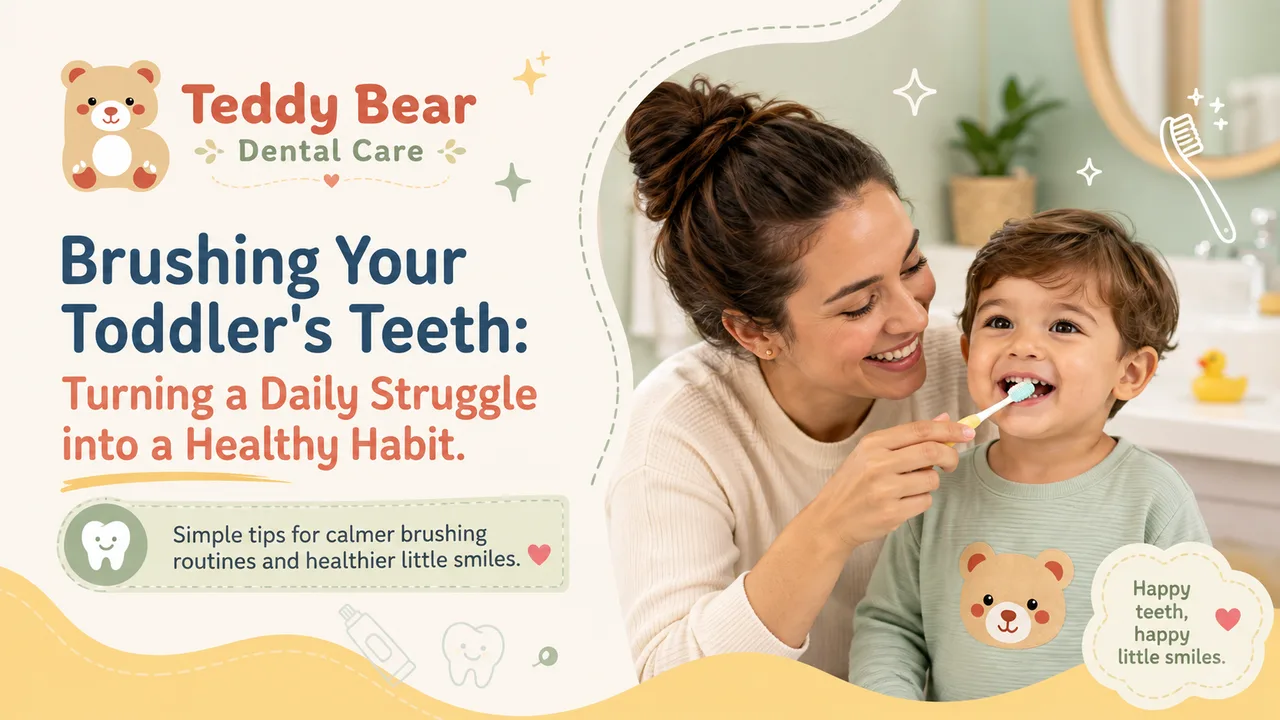
Learn about how to Brush Your Toddler’s Teeth with practical guidance from Teddy Bear Dental Care.
The "terrible twos" and "terrible threes" have earned their names for a reason. Toddlers are independent, strong-willed, and often not eager to cooperate, especially when it's time to brush their teeth. If you've ever tried to brush a toddler's teeth at bedtime, you know how tough it can be.
Brushing might feel like a nightly battle, but it's an important habit to keep. Starting good oral care early gives your child a better chance at healthy teeth for life. In this guide, you'll learn why brushing matters, when to visit the dentist, and tips to make brushing easier and more fun.
Why Toddler Toothbrushing Matters
The main reason for brushing is to prevent cavities. Many parents underestimate how common cavities are in young children. The American Academy of Pediatrics states that over 25% of children have a cavity by age three. By age five, nearly half of all kids have experienced one. Early cavities can lead to pain, infections, difficulty eating, speech issues, and early tooth loss, so visiting the dentist early is crucial for prevention.
Toddlers are at higher risk due to habits like thumb sucking, bedtime bottles, and sipping from sippy cups throughout the day. "Baby bottle tooth decay" is a real problem and can affect more than just their teeth.
Fluoride toothpaste is essential for protecting young teeth. The AAP suggests using a tiny amount, about the size of a grain of rice, as soon as the first tooth comes in. Xylitol is another ingredient in some pediatric dental products that helps parents prevent tooth decay in kids. This early start helps make enamel stronger and lowers the risk of cavities.
Dental Milestones to Know
Knowing what your child needs at each stage can make dental care feel easier:
- Birth to first tooth: Gently clean your baby's gums twice daily using a soft, damp washcloth.
- First tooth eruption: Begin brushing with a soft infant toothbrush and a rice-sized smear of fluoride toothpaste. You can also use dental tooth wipes with Xylitol after feedings, in addition to brushing in the morning or at bedtime.
- First dental visit: Both the American Dental Association and pediatric dentists recommend scheduling the first dental appointment by your child's first birthday. Your children's dentist in Moorpark can recommend the right toothbrush and technique.
- Ages 1 to 3: Most kids will have all 20 baby teeth by age three. Dental checkups every six months are important during these years. After your child turns three, you can start using a pea-sized amount of toothpaste. Your toddler may start wanting to brush their own teeth at this time. Encourage their independence, but towards the end, take over the toothbrush to model good technique and get the job done.
- Independent brushing: Some kids can brush well by age six, but others need help for longer. Your pediatric dentist can let you know when your child is ready to brush alone.
Making Brushing More Enjoyable
Toddlers may not always like brushing, but some creative ideas can make it easier:
- Let your child brush a favorite toy's "teeth" while you brush theirs.
- Play a favorite song or a short cartoon during brushing to make it more fun and help your child associate brushing with a positive experience. Use a two-minute timer so brushing has a clear beginning and end.
- Join in the fun and brush with your kiddo.
- Use sticker charts or small rewards to celebrate cooperation.
- Stick to a routine so that your child feels secure and learns healthy habits without stress, helping parents feel more confident in their approach. Keep things light and encouraging. Too much pressure can make things more complicated at this age.
If brushing is still tough, your pediatric dentist can give you more personalized tips.
How to Brush Your Toddler's Teeth: Step by Step
Step 1: Gather the essentials
Use a soft, child-sized toothbrush and fluoride toothpaste. Letting your toddler pick their toothbrush or toothpaste flavor can help them feel involved and excited.
Step 2: Set expectations
Explain what will happen in simple words to help your child get ready. Watching videos, reading books, or showing them on a stuffed animal can make them feel more comfortable. At Teddy Bear Dental Care in Moorpark, we frequently use the "Tell, Show, Do" technique, which means we tell kiddos what we'll do and demonstrate it before we do anything. The same would work with your child.
Step 3: Apply the right amount of toothpaste
Use a smear of fluoride toothpaste about the size of a grain of rice for children under three, and a pea-sized amount for children over three. Remind your child not to swallow the toothpaste to prevent ingestion.
Step 4: Brush gently and thoroughly
Your toddler may want to brush first, and that's fine. Watch them, then help finish to make sure every tooth gets clean, even the ones in the back.
Step 5: Encourage spitting
Swallowing a small amount of toothpaste is not harmful, but too much can upset your child's stomach. Show your child how to spit into the sink after brushing.
And that's it. You're ready for the next brushing session.
Key Mistakes To Avoid When Teaching Your Toddler To Brush Their Teeth
- Too much toothpaste can cause gagging, aversion, or fluorosis.
- Hard toothbrush bristles can damage teeth and gums.
- Horizontal brushing can hurt soft gum tissue.
- Sharing toothbrushes can spread tooth-harmful bacteria and other viruses.
- Rinsing immediately with water removes the fluoride benefit of the toothpaste. Teach your toddler to spit instead.
- Turning brushing into a battle will definitely create a stressful experience for everyone and lead to resistance.
Give Your Toddler the Best Start
The toddler years are an essential time to build good dental habits, starting with the first dental visit around age one. By brushing regularly at home and seeing the dentist, you can help keep your child's smile healthy for years.
At Teddy Bear Dental Care, our dental team, experienced in caring for young children, can help you every step of the way. We will be happy to review home care, offer tips, and show your child the right way to brush their pearly whites. We will also strive to make dental visits positive, supportive, and even fun. Call us or book online to schedule a visit for your little one, or search "children's dentist in Moorpark near me" to get started.
Your next step
Explore children’s dental care or contact our team to discuss your needs.
Your next step
Let’s talk about your child’s smile.
Bring your questions to Smiles of Moorpark. We’ll help you understand your options and plan care around your needs.