Baby Teeth Matter More Than You Think: Why Cavities in Baby Teeth Shouldn’t Be Ignored.
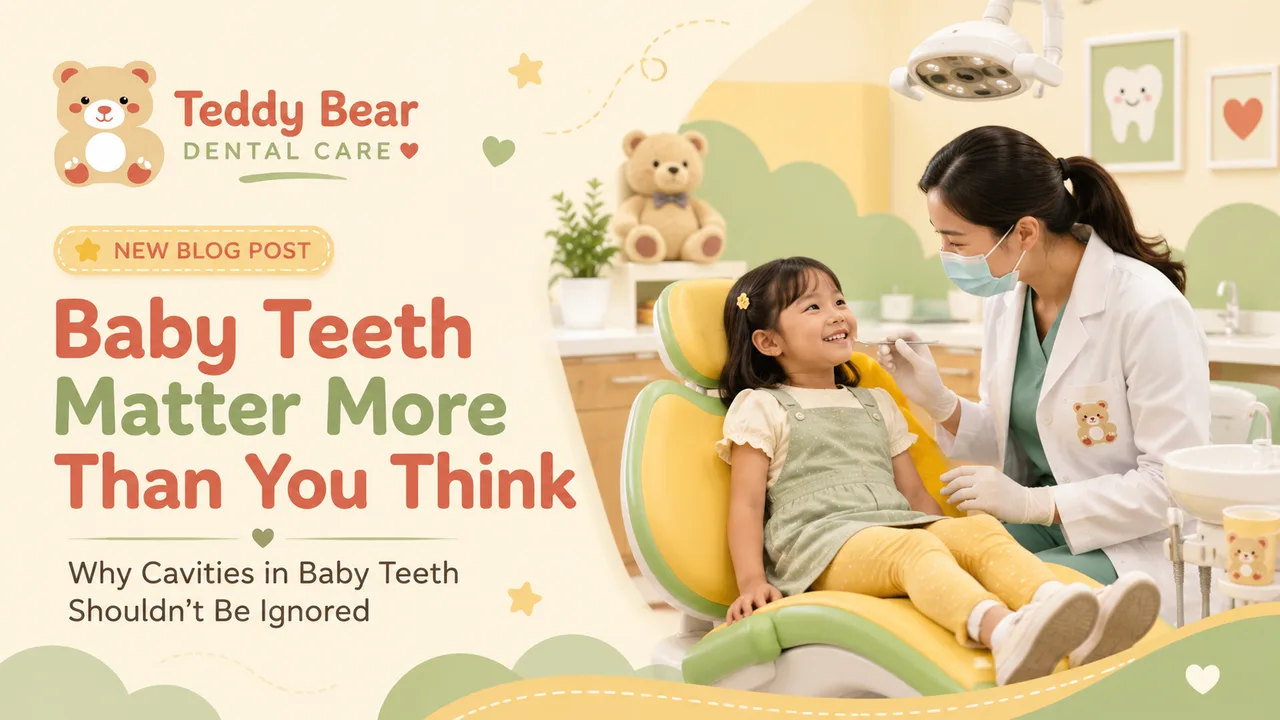
Learn about why Baby Teeth Matter: A Parent’s Guide with practical guidance from Teddy Bear Dental Care.
It’s a question dentists hear all the time:
“It’s just a baby tooth. It’s going to fall out anyway — does it really need to be treated?”
It’s an understandable question. After all, baby teeth are temporary. But temporary doesn’t mean unimportant.
Primary, or “baby,” teeth play several important roles in your child’s development. They help children eat comfortably, speak clearly, maintain space for permanent teeth, and develop healthy habits that can influence their oral health for years to come.
At Teddy Bear Dental Care in Moorpark, one of our biggest goals is helping parents understand what is happening in their child’s mouth without judgment or unnecessary worry. When we catch cavities early, treatment is often much simpler. When they are ignored, a small problem can sometimes turn into pain, infection, or a much bigger dental problem.
Here’s why those little teeth deserve more attention than you might think.
Baby Teeth Help Your Child Eat and Grow
Children need healthy teeth to chew food comfortably.
When a tooth has a cavity, a child may begin avoiding certain foods without telling you why. They might chew on only one side of their mouth, refuse crunchy foods, avoid cold foods, or suddenly become a much pickier eater.
Young children can't always explain that a tooth hurts. Instead, parents may notice changes such as:
- Eating more slowly
- Avoiding foods they previously enjoyed
- Chewing only on one side
- Complaining that food is “too hard”
- Becoming upset during meals
- Waking at night
- Holding or rubbing their cheek
Healthy baby teeth allow children to eat a varied diet during important years of growth and development.
A cavity that seems small today can eventually become so sensitive or painful that it interferes with eating.
Baby Teeth Are Important for Speech Development
Teeth also play an important role in learning to speak.
Your child's tongue, lips, and teeth work together to form sounds and pronounce words. Losing certain baby teeth too early can affect how a child forms sounds, especially while speech patterns are still developing.
Of course, children naturally lose their front baby teeth as they grow, and adorable temporary lisps are completely normal.
The concern is when teeth are lost much earlier than nature intended because of severe decay or infection.
Keeping baby teeth healthy helps support normal speech development until permanent teeth are ready to take their place.
Baby Teeth Save Space for Permanent Teeth
One of the most important — and least understood — jobs of baby teeth is acting as space holders for permanent teeth.
Think of your child's baby teeth as little placeholders.
Underneath them, permanent teeth develop and gradually move toward their eventual positions.
When a baby tooth stays in place until the appropriate time, it helps preserve the space where the adult tooth will eventually erupt.
If a baby tooth must be removed early because of severe decay, neighboring teeth can sometimes shift into the space.
That can leave less room for the permanent tooth.
Depending on the child's age and which tooth is lost, the dentist may sometimes recommend a space maintainer to help preserve that space.
This is one reason preventing or treating cavities in baby teeth can benefit you long after the baby tooth is gone.
Cavities Can Hurt — Even in Baby Teeth
Tooth decay doesn't know whether a tooth is permanent or temporary.
A cavity begins when bacteria in the mouth use sugars and carbohydrates from foods and drinks to produce acids. Over time, those acids can weaken the tooth and create a cavity.
Small cavities may not hurt at all.
That's actually one of the problems.
Parents may assume everything is fine because their child hasn't complained.
But as decay progresses deeper into the tooth, it can begin causing sensitivity or pain.
A child may develop discomfort with:
- Cold drinks
- Sweets
- Chewing
- Brushing
- Eating
Eventually, a deeply decayed tooth can begin hurting spontaneously or even wake a child during the night.
Waiting until a tooth hurts often means the problem has already become significantly more complicated.
A Cavity Can Turn Into an Infection
Untreated tooth decay can eventually reach the nerve inside the tooth.
At that point, bacteria may cause an infection or dental abscess.
Signs can include:
- Toothache
- Swollen gums
- A small bump or “pimple” on the gums
- Facial swelling
- Bad taste or drainage
- Fever
- Difficulty eating
- Difficulty sleeping
Never ignore dental infections just because they involve a baby tooth.
An infected tooth may require more extensive treatment or, in some situations, removal.
More importantly, we don't want children experiencing unnecessary pain when we know that we can treat dental problems much earlier and more comfortably.
If your child develops facial swelling, fever, significant pain, or swelling that appears to be spreading, contact a dentist promptly.
“But It's Going to Fall Out Anyway…”
Yes — eventually.
But the important question is:
When?
A front baby tooth that is already loose in a 6-year-old is very different from a badly decayed molar in a 3-year-old.
Some baby molars are designed to remain in a child's mouth until approximately ages 10, 11, or even 12.
That means a cavity discovered in preschool could potentially affect a tooth your child still needs for many more years.
When deciding whether a baby tooth needs treatment, dentists consider several factors:
- Your child's age
- Which tooth is affected
- How large the cavity is
- How close the tooth is to falling out naturally
- Whether the child has pain
- Whether infection is present
- The health of the surrounding teeth
- Your child's individual development
Not every cavity requires the same solution.
That's why an examination is so important.
Cavities in Baby Teeth Can Progress Quickly
Baby teeth are smaller than permanent teeth and have thinner layers of enamel and dentin.
That means decay sometimes has a shorter distance to travel before reaching the nerve.
A cavity that appears relatively small may progress faster than a parent expects.
This is another reason regular dental visits matter.
Finding decay early often gives families more options and can make treatment easier for the child.
We always prefer prevention first and early intervention whenever possible.
Cavities Can Affect a Child's Dental Confidence
Another piece parents don't always consider is that a child's early dental experiences can influence how they feel about dentistry later.
A child whose first major dental experience happens because they have a severe toothache may naturally associate the dentist with pain.
That is exactly what we would rather prevent.
Routine visits help children become familiar with the dental office when they are comfortable.
At Teddy Bear Dental Care, we've created a pediatric environment specifically for children, with a bright, welcoming atmosphere, TVs and cartoons, games, toys, and prizes, and parents welcome nearby.
We want children to build positive associations with dental care for their teeth —ideally long before they ever experience a dental emergency.
Prevention Is Much Easier Than Treating a Toothache
The best cavity is the one your child never gets.
Parents can make a tremendous difference with a few consistent habits:
Brush twice a day with fluoride toothpaste. Young children usually need help brushing thoroughly.
Begin flossing when teeth touch. A toothbrush can't clean tight spaces between teeth effectively.
Limit frequent snacking. How often teeth are exposed to carbohydrates and sugar can matter just as much as how much a child eats.
Choose water between meals. Frequent sipping on juice, sports drinks, flavored milk, or sweetened beverages gives cavity-causing bacteria repeated opportunities to produce acid.
Keep regular dental visits. Routine examinations allow your dentist to monitor development and catch problems before they become painful.
Little Teeth Have Big Jobs
Baby teeth may be temporary, but they have a lot of work to do before they leave.
They help your child eat, speak, smile, grow, and hold space for permanent teeth.
So when a dentist recommends treating a cavity in a baby tooth, it isn't simply about saving a tooth that will eventually fall out.
It's about keeping your child comfortable and healthy while protecting the developing smile underneath.
If you're concerned about a cavity — or you're not sure whether something you're seeing is normal — have it checked.
Sometimes the answer is, “Let's watch it.”
Sometimes early treatment is the better choice.
Either way, getting the information early gives you more options.
At Teddy Bear Dental Care in Moorpark, we're here to make children's dental care comfortable, positive, and easy for families — with gentle care, plenty of patience, and an office designed just for little smiles.
Because baby teeth may be small, but the job they do is pretty big.
Your next step
Explore children’s dental care or contact our team to discuss your needs.
Your next step
Let’s talk about your child’s smile.
Bring your questions to Smiles of Moorpark. We’ll help you understand your options and plan care around your needs.